

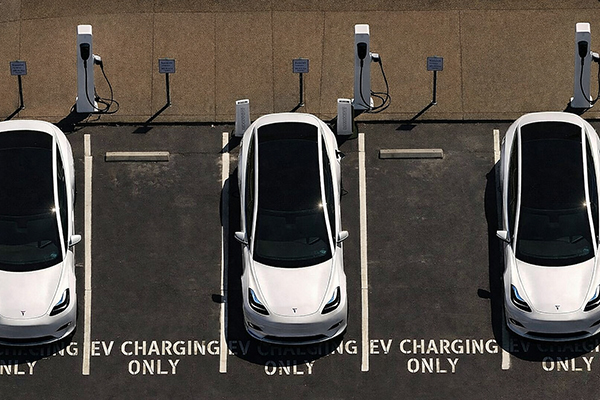
March 16: U.S. EV Sales Drop 41% as electric vehicle (EV) sales in the United States fell sharply at the start of 2026. Registrations declined 41% in January compared with the same month last year, following the end of the $7,500 federal EV tax credit on September 30, 2025, which had helped lower purchase costs for buyers.
According to data from S&P Global Mobility, about 59,802 electric vehicles were registered in January, out of nearly 1.2 million total new vehicle registrations. EVs accounted for 5.1% of the market, down from 8.3% in January 2025.
At the same time, gasoline-powered vehicles increased their market share to 76.6%, while hybrids rose to 14.7%.
The removal of the tax credit has affected both consumers and automakers. Without the incentive, fewer buyers are choosing electric vehicles, while manufacturers face less pressure to push EV sales.
Despite the overall decline, a few automakers recorded growth. Cadillac saw EV registrations increase 8.1%, while Toyota recorded a 25% rise. Luxury EV maker Lucid Motors reported one of the biggest gains, with registrations jumping 97% year-over-year.
Other luxury brands also saw strong percentage growth. Lexus recorded a 166% increase, although it sold 810 EVs in January. Maserati saw EV registrations rise 140%, but the brand sold only 12 electric cars during the month.
Meanwhile, Tesla, the largest EV seller in the United States, registered 32,123 vehicles, representing a 26% decline compared with January last year.
Industry analysts say the market is entering a transition period as companies reassess their EV strategies. While some automakers are slowing down their plans, others are continuing to launch new electric models.
The situation contrasts with Europe, where EV demand continues to grow. Nearly 190,000 electric vehicles were registered there in January, marking a 13.9% increase year-over-year and raising EV market share to 19.3%.
Analysts say the coming months will show whether the U.S. EV market stabilizes or continues to decline without government incentives.






Leave a Reply